


Most people do not think about their bones until something happens.
A slip, a fall or a fracture may be the first time someone realises their bones are not as strong as they expected. This can be surprising, especially because low bone density often does not cause obvious symptoms in the earlier stages.
This is where a bone density scan may be useful.
Understanding what a bone density scan checks and who may benefit from it can help you decide whether it should be part of your health screening plan.
What Is a Bone Density Scan?
A bone density scan is a test that measures how much mineral content is present in your bones. It helps assess bone strength and estimate the risk of fractures.
It is also known as a bone mineral density test, BMD test or DXA scan.
The scan is commonly used to assess bone density at the hip and spine. These areas are important because fractures in the hip and spine can affect mobility, independence, and quality of life, especially in older adults.
A bone density scan can help detect low bone density, which may indicate osteopenia or osteoporosis.
Osteopenia means bone density is lower than expected, but not low enough to be classified as osteoporosis. Osteoporosis means the bones have become weaker and more fragile, increasing the risk of fractures even with very minor impact.
Why Is Bone Density Important?
Bones are living tissues. Throughout life, old bones are broken down and new bones are formed.
When we are younger, the body usually forms new bone faster than it loses it. As we age, this balance can shift. Bone loss may happen more quickly than formation, and bones can become less dense and more fragile over time.
For women, bone loss can accelerate after menopause due to hormonal changes. Men can also develop low bone density, particularly with age or certain health conditions.
The concern is that low bone density often develops quietly. Many people do not know they have it until they sustain a fracture from a minor fall or injury.
Who May Benefit from a Bone Density Scan?
A bone density scan is not necessarily needed by everyone at every age.
It is more commonly considered for people who may have a higher risk of having low bone density or fractures (with minor impact). This may include individuals who:
- Are post-menopausal women
- Are men aged 65 and above
- Have had a previous fracture after a minor fall or injury
- Have a family history of osteoporosis or hip fracture
- Have low body weight or significant weight loss
- Have long term use of steroid medication or other medications that can affect bone health
- Smoke or drink alcohol regularly
- Have conditions that affect calcium absorption or bone health
- Have early menopause or certain hormonal conditions
- Have concerns about bone health as part of a broader health screening review
If you are unsure whether a bone density scan is suitable for you, it is helpful to discuss your age, medical history and risk factors with a doctor.
Do Younger Adults Need a Bone Density Scan?
Younger adults do not usually need a bone density scan as part of routine screening unless there are specific risk factors.
For example, a younger person may be advised to consider bone density testing if they have had an unexpected fracture (from a minor impact), long term steroid use, early menopause, certain hormonal conditions, eating disorders, very low body weight or medical conditions that affect bone strength.
In other words, age is important, but it is not the only factor. Your overall risk profile matters too.
What Happens During a Bone Density Scan?
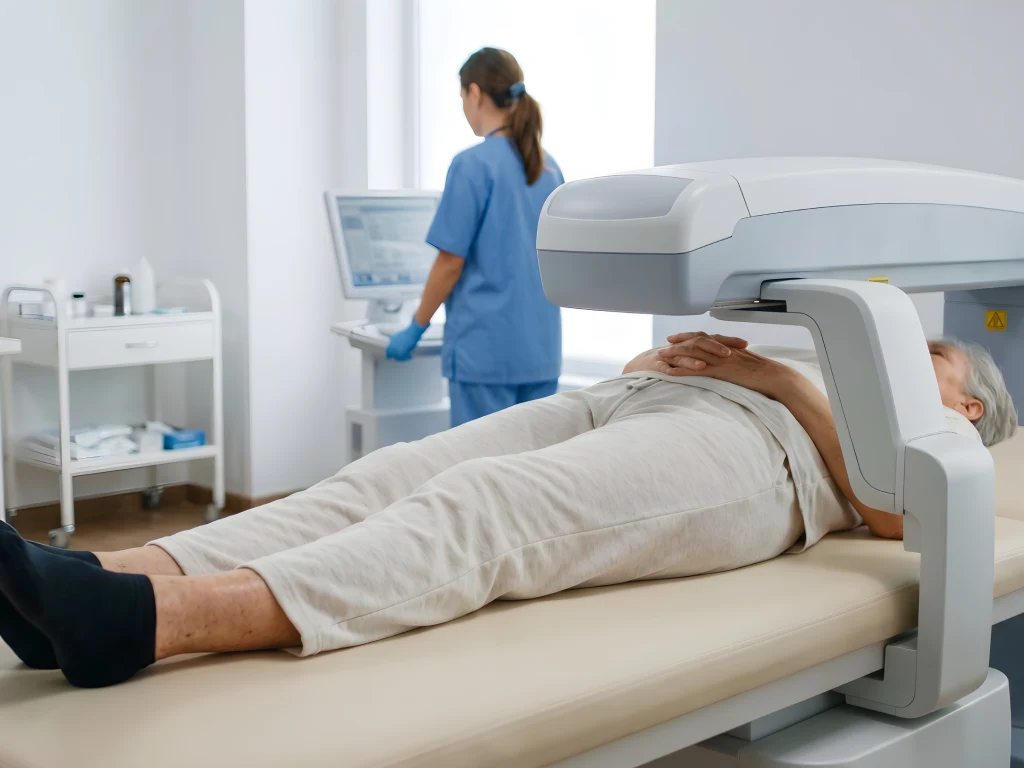
A bone density scan is usually simple and non-invasive.
During the scan, you will lie still while the machine measures bone density at selected areas of the body. The hip and spine are commonly assessed.
The scan uses a low dose X-ray technique to estimate bone mineral density. It is usually painless and does not require recovery time.
What Can the Results Tell You?
Your bone density scan results help show whether your bones are within the expected range for your age and sex, or whether there may be concern for osteopenia or osteoporosis.
The results may help your doctor assess:
- Whether you have osteopenia or osteoporosis
- Whether your fracture risk may be increased
- Whether lifestyle changes may be recommended
- Whether further medical review is needed
- Whether your bone density should be monitored over time
The result should not be viewed on its own. Your doctor may also consider your age, previous fractures, family history, medications, medical conditions, diet, exercise habits and fall risk.
Why Bone Health Is Part of Preventive Care
Bone health is an important part of healthy ageing, but it is often overlooked because osteoporosis usually develops without noticeable symptoms.
Unlike blood pressure or blood sugar, weak bones may not cause clear warning signs. By the time a fracture happens, bone density may already be low.
This is why bone health can be an important part of preventive care, especially for older adults and individuals with risk factors.
A bone density scan can provide useful information before a serious fracture occurs, allowing you to better understand your bone health and discuss suitable next steps with your doctor to minimise the risk of future fractures.
How Can You Support Bone Health?
Screening is only one part of looking after your bones. Daily lifestyle habits also play an important role in supporting bone strength.
To support bone health, you can consider:
- Eating calcium rich foods such as milk, yoghurt, tofu, leafy vegetables and calcium fortified products
- Getting enough vitamin D
- Doing weight bearing exercises such as walking, stair climbing and resistance training
- Building strength and balance to reduce the risk of falls
- Avoiding smoking
- Limiting alcohol intake
- Reviewing long-term medications with a doctor if they may affect bone health
- Managing health conditions that may contribute to bone loss
These measures are beneficial for overall bone health and are especially important for individuals at increased risk of osteoporosis or fractures.
Should a Bone Density Scan Be Part of Your Health Screening?
A bone density scan may be useful if you have risk factors for low bone density, are at an age where bone health becomes a greater concern, or want to better understand your fracture risk.
If you are planning a health screening, consider speaking with a doctor about whether bone density testing is suitable for you. This can help ensure that your screening programme is relevant to your age, lifestyle, medical history and long-term health needs.
At Healthway Screening Centres, our health screening programmes include a range of tests to help you better understand your health, with medical review and follow up guidance where appropriate.